Sacred Awakening: A Pilgrimage Beyond the Sacred Sites
A journey delving into the essence of living in Christ Consciousness.
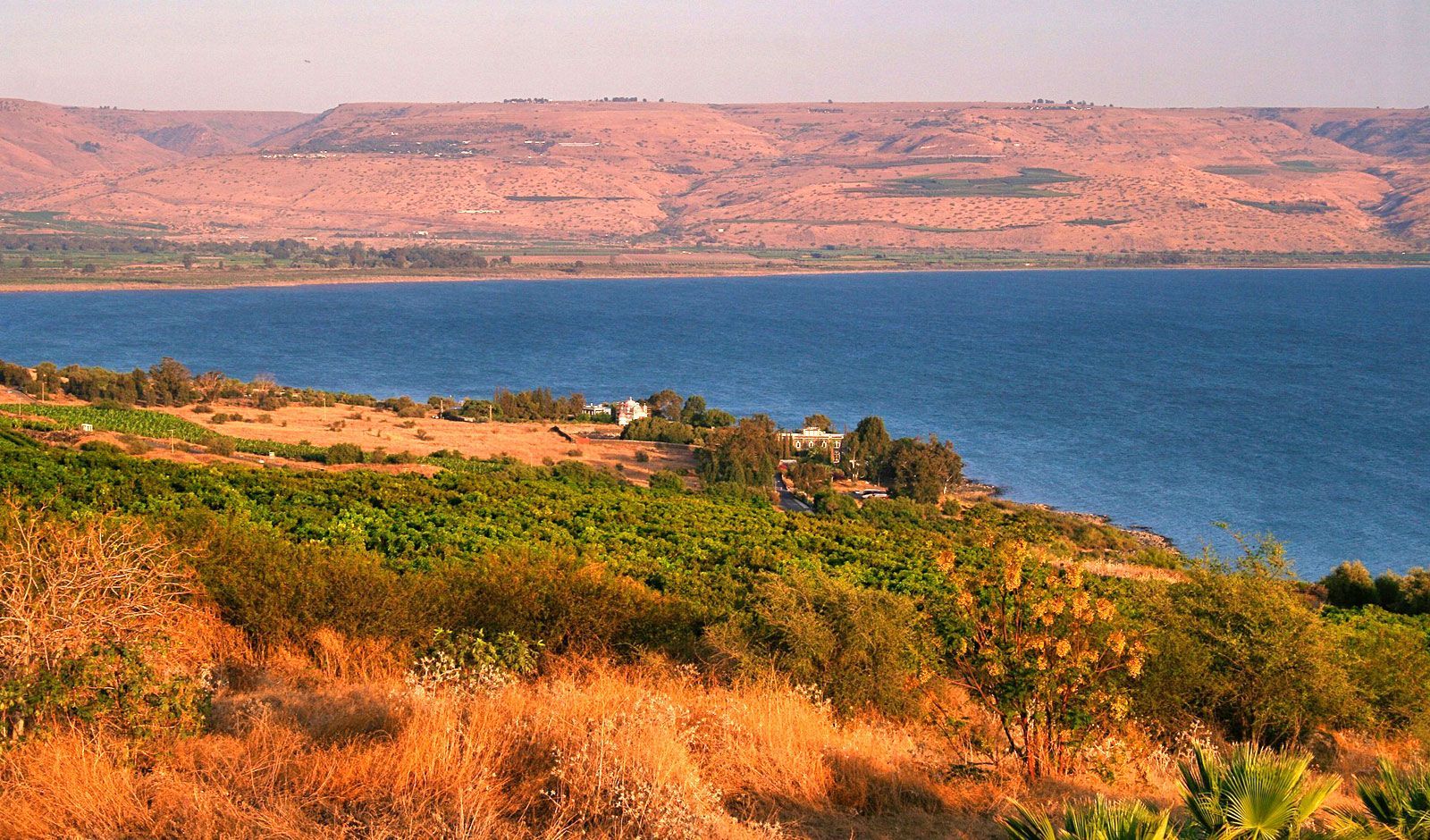
We've just completed one of the most profound pilgrimages I've ever experienced.
Our Sacred Awakening Pilgrimage was unlike any journey I've helped facilitate. Inspired by Sami Awad's book of the same name, this was an experiential exploration of Jesus' foundational teachings, the Beatitudes—not simply as ancient wisdom to be studied, but as a living invitation to see ourselves, one another, and the world differently.
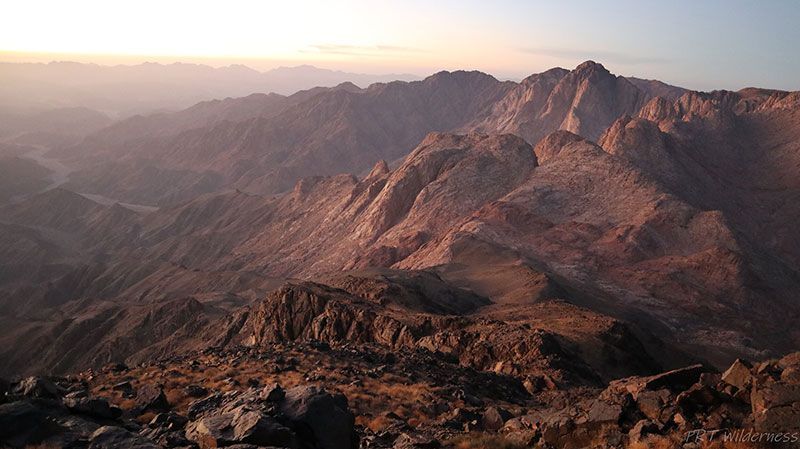
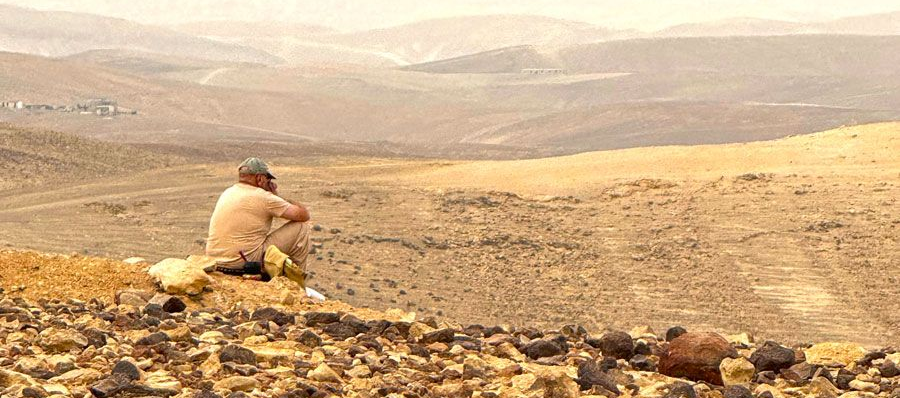
Guided by Sami Awad and Rawan Roshni, we entered into immersive and embodied practices that brought these teachings to life in fresh and often challenging ways. From days of silence and contemplation in the desert to standing in solidarity with Palestinian families living under occupation, we explored what it truly means to embody peace, compassion, and love in a world so often shaped by fear, division, and domination.
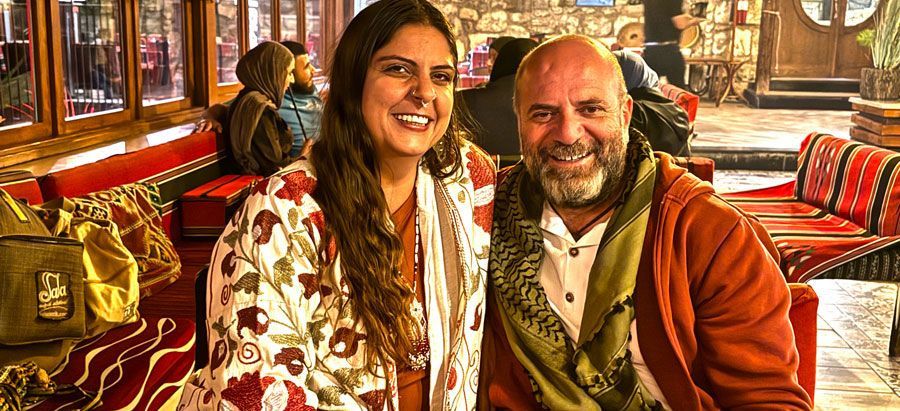
This was not a traditional tour of sacred sites. It was as much an inward journey as an outward one. A journey from the prevailing consciousness of separation, power, and control toward a deeper Christ consciousness rooted in humility, nonattachment, compassion, and even love for one's enemies.
And it wasn't always easy.
Some of what we witnessed was heartbreaking. Some of the questions we confronted challenged our deepest assumptions. We were invited to sit with discomfort, to question our own attachments, and to recognize how easily the very patterns we hope to transform in the world can also live within us.
But perhaps that's the point. Transformation rarely happens within the comfort of what we already know. It asks something of us. It invites us to surrender familiar ways of seeing so that something new can emerge.
Occupation: External and Internal
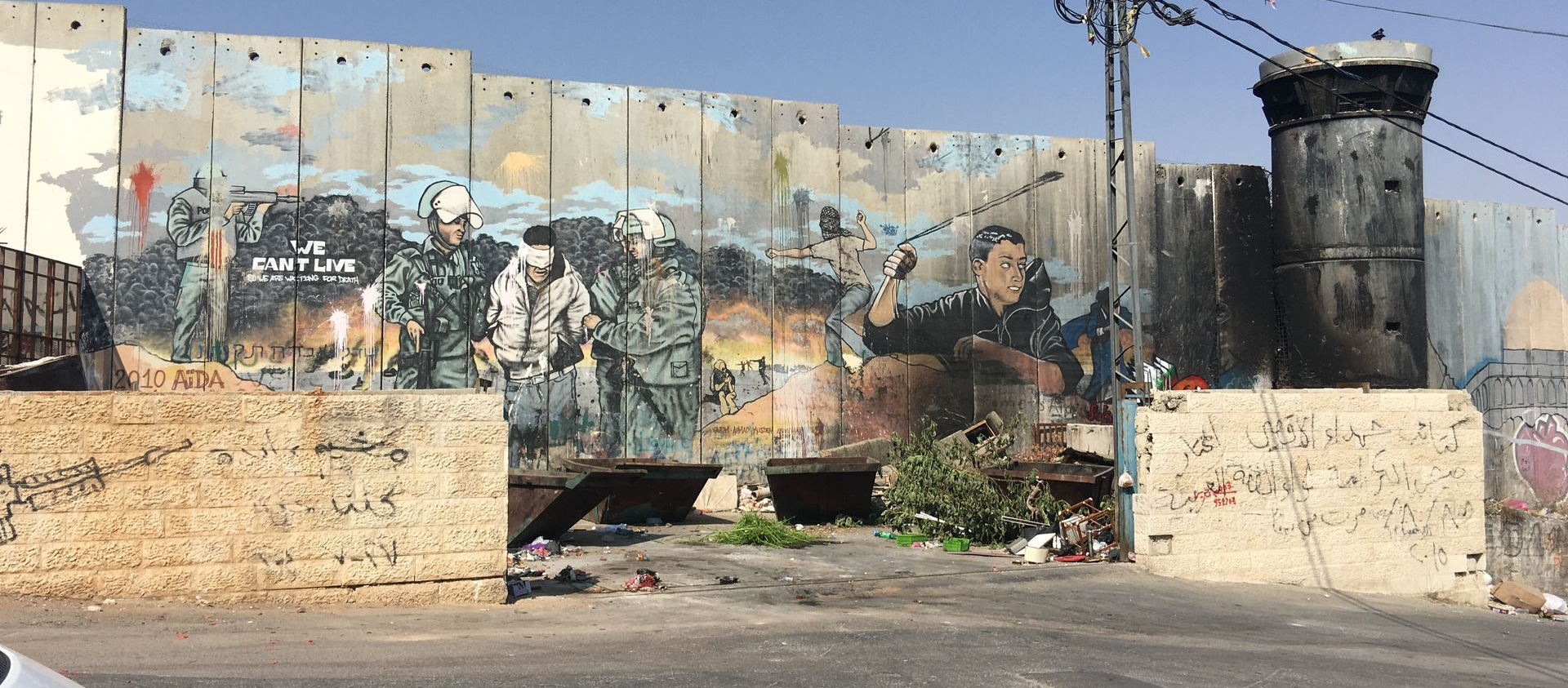
All around us in Bethlehem, we witnessed the harsh realities of oppression, poverty, and military occupation. To see and experience these conditions firsthand was heartbreaking. The imposing separation wall was a constant presence, a stark reminder of the physical and psychological barriers that divide people and communities. Desperation and hopelessness were evident, yet amid it all, we encountered extraordinary resilience, dignity, and hope.
But this external reality also invited us to confront a deeper, more personal truth: the consciousness of domination, power, fear, and control that manifests in the world around us can also take root within our own hearts, thoughts, and beliefs.
One of the most profound, and perhaps misunderstood, Beatitudes is "Blessed are the poor in spirit." What does it really mean to become poor in spirit? What does it ask us to surrender?
How do we begin to release the attachments that quietly "occupy" our hearts and minds? What are we clinging to—things that may seem important, necessary, or even good, but ultimately keep us from experiencing a deeper, more transcendent truth?
Is it money?
The need to be right?
An ideology or worldview?
The need to be loved or accepted?
Our reputation or sense of identity?
Perhaps even a wound from our past that we've carried for so long we're afraid of who we might become without it?
To become poor in spirit is not necessarily to have less, but to be less possessed by what we have, what we believe, or who we think we are.
What might happen if we allowed ourselves to be stripped of these attachments, to loosen our grip on the things that keep us from becoming more fully human, more compassionate, and more free?
These were among the questions we were invited to wrestle with—not simply as abstract spiritual concepts, but as lived experiences. In our encounters with the Palestinian people, in the stillness and barrenness of the desert, and in the quiet depths of our own hearts, we were asked to look beyond the world as it is and begin imagining what might become possible, both within us and around us.
Interspirituality: Discovering Our Shared Humanity
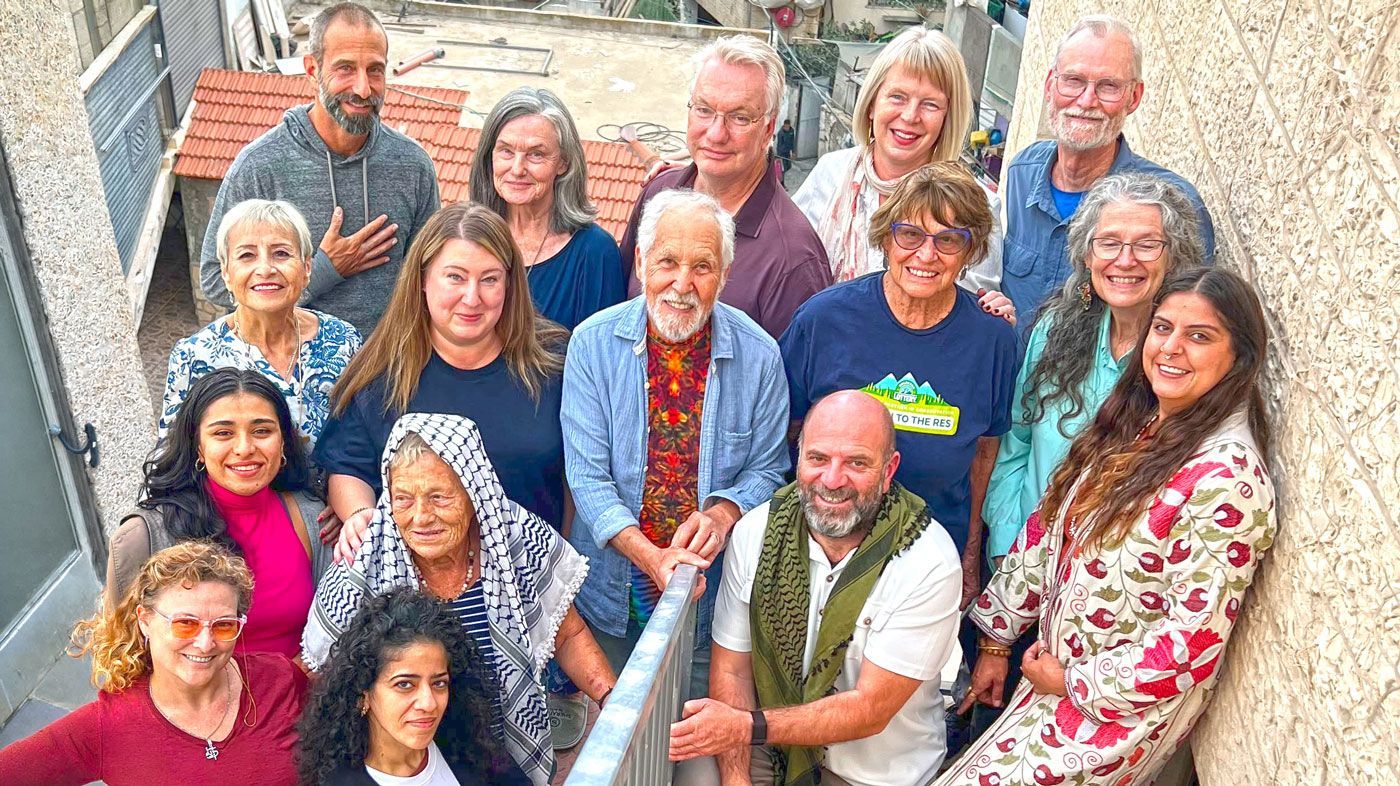
One of the most beautiful and unexpected dimensions of this pilgrimage was the spiritual diversity of the group I came to love.
We gathered from different faith traditions, spiritual practices, and life experiences, united by a shared curiosity about what it means to live in Christ consciousness. Among us were people from Muslim and Jewish backgrounds, shamanic practitioners, Spiritualist ministers, practicing Buddhists, and others exploring their own spiritual paths.
Yet rather than allowing our differences to define or divide us, we discovered how much we could learn from one another.
Together, we explored the Beatitudes not as teachings belonging exclusively to one religion, but as an invitation into a more expansive way of being—one grounded in humility, compassion, nonviolence, and love.
This was interspirituality in its most beautiful expression. Not a blending of traditions into something indistinguishable, nor an invitation to convert or abandon what we believe, but an opportunity to encounter the sacred through one another's experiences and perspectives.
Our differences did not diminish our spiritual foundations. They enriched them, challenged them, and invited us to see beyond the boundaries we sometimes place around the Divine.
Perhaps that was one of the greatest gifts of this journey: discovering that the path toward deeper spiritual awakening does not require us to become the same, but to recognize the sacred within our differences—and the humanity we share.
Through it all, something beautiful unfolded within our group. Strangers became friends, vulnerability gave way to trust, and together we experienced a growing sense of love, connection, and shared humanity.
Renewal
We arrived in the Holy Land seeking a deeper understanding of the Beatitudes. We left realizing they are not simply teachings to understand, but a way of life we are continually being invited to embody. The pilgrimage may have ended, but the awakening, in many ways, has only begun.
And the journey doesn't end here.
Our hope is that this will be the first of many Sacred Awakening pilgrimages, not only in the Holy Land but in other parts of the world, including here in the United States.
If this kind of journey speaks to something within you, I'd love to invite you to stay connected as we explore what's next.
Peace and love to all who shared this remarkable journey with me. We were once strangers... we are now unlikely friends.